.png?w=500&h=200)
Learn about FPV
What is an FPV drone?

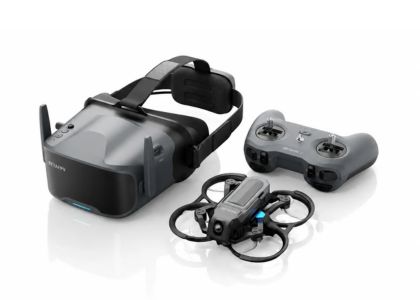
An FPV drone, short for "First Person View drone," is a type of drone that allows the operator to experience flight as if they were sitting in the cockpit. Unlike traditional drones, which rely on external views to control their position, FPV drones transmit live footage from the drone's perspective to video glasses worn by the pilot. This immersive visual experience enables precise control of the drone using a remote control, making it feel like the pilot is flying the drone directly.
FPV drones typically do not have autopilots and are often small rotorcraft, with quadcopters or multi-rotors being the most common. Their compact size and agility allow them to navigate through tight spaces and perform complex maneuvers with ease. Nowadays, FPV drones are built on civilian drone platforms, combining the ease of operation and affordability of consumer drones with specialized features to meet diverse needs.
Performance of FPV drones
Superior Maneuverability: FPV drones excel in their ability to move quickly and nimbly. Their compact and lightweight design enables rapid takeoffs and landings, even in confined areas, and allows for vertical takeoff and landing without the need for a runway. This adaptability makes them suitable for various terrains, from urban streets to mountainous regions.
High-Speed Flight: These drones are capable of reaching impressive speeds in a short time and can execute sharp turns, rolls, and other challenging flight maneuvers. In professional FPV racing events, pilots can push drones to speeds exceeding 100 kilometers per hour, navigating through obstacles with precision and grace.
Immersive Experience: When pilots put on FPV glasses, they are instantly immersed in the drone's perspective, feeling the drone's movements in real-time. This highly simulated control experience is unmatched by traditional drone piloting methods.
Real-time Mapping and Low Latency
FPV drones rely on advanced low-latency video transmission technology to achieve precise maneuvering. The high-definition camera on the drone captures real-time images of the surroundings, which are quickly transmitted to the pilot's display device. This ensures that pilots have instant access to the drone's "view," allowing for accurate and timely responses.
Digital Transmission: Modern FPV drones often use digital transmission technology, which provides clearer and more stable images while maintaining low latency, even in complex electromagnetic environments. Some high-end models can keep image transmission latency under 20 milliseconds, ensuring near-synchronization with the drone's actual flight state.
Cost Advantage and Customization
Compared to traditional drones, FPV drones offer significant cost advantages. Their relatively low price makes large-scale deployment feasible. Additionally, the highly customizable nature of FPV drones allows users to personalize their drones with a wide range of components, such as cameras, mapping systems, batteries, and flight control modules, to suit their specific needs.
Applications of FPV Drones

Racing and Sports: FPV drone racing is an exciting and challenging application. Pilots control modified FPV drones through specially designed tracks, relying on quick reflexes, superior maneuvering skills, and precise understanding of the drone's performance.
Exploration and Adventure: For those who love exploration, FPV drones are indispensable companions. They can reach places that are difficult for humans to access, providing unique perspectives and experiences for explorers.
Creative Aerial Photography: FPV drones bring new vitality to aerial photography, offering dynamic and smooth camera movements that capture stunning visuals in various environments.
Industrial Applications: FPV drones are increasingly used in modern industrial fields, aiding in tasks such as construction site surveys, inspections, and logistics, enhancing production efficiency and safety.
Essentials for maneuvering FPV drones

Basic Operation: Mastering basic operations like takeoff, hovering, and landing is crucial. Pilots must also develop advanced skills to navigate complex terrains and execute precise maneuvers.
Safety Considerations: Safety is paramount. Pilots must choose appropriate flight locations, comply with regulations, and conduct thorough pre-flight checks to ensure safe and responsible operation.
FPV Drone Development Outlook

With the rapid development of science and technology, the future of FPV drones is full of infinite possibilities, which makes people look forward to it.
In terms of technological breakthroughs, the innovation of battery technology is undoubtedly the most important. Researchers are working hard to develop batteries with higher energy density and greater endurance. Imagine a future FPV drone that can fly for hours on end, easily spanning hundreds of kilometers with a single battery, greatly expanding its range of application. At the same time, the significant increase in range will also open up a wider world for FPV drones, whether it's for expeditions in remote areas or long-distance logistics and distribution, it will be able to handle it with ease.
FPV drones will also take a major leap forward in terms of payload capacity. The ability to carry heavier and more diverse equipment means that its functions in various fields will be greatly enriched. In the agricultural field, it can carry more advanced plant protection equipment to realize accurate and efficient pesticide spraying and crop monitoring; in the industrial field, it can carry high-precision inspection instruments to carry out meticulous inspections of large-scale infrastructure, pipelines and lines, etc., and discover potential problems in a timely manner.
Intelligent and autonomous flight is the key direction of FPV drone development. With the help of advanced artificial intelligence technology and machine learning algorithms, the drone will have strong autonomous decision-making ability. It can automatically plan the optimal flight path according to the preset tasks and real-time environmental changes, flexibly avoid various obstacles, and even quickly make emergency responses to ensure flight safety when encountering unexpected situations.
From the perspective of application scenario expansion, FPV drones have great potential in the field of logistics and distribution. It can ignore ground traffic congestion, quickly shuttle between urban high-rise buildings, deliver small packages accurately and timely to customers, realizing the true meaning of the “last kilometer” efficient distribution. In emergency rescue scenarios, FPV drones can quickly arrive at the scene of a disaster, provide real-time disaster information for rescuers, assist in the search for trapped people, and also accurately deliver emergency rescue supplies to dangerous areas, competing for time and seconds to save lives.
In addition, FPV drones will also bring people a new virtual travel experience. By closely integrating with virtual reality technology, users will be able to maneuver their drones to tour famous sites around the world without leaving their homes. Whether overlooking the magnificent scenery of the Grand Canyon or traveling through the ancient streets of Paris, people can feel as if they were there and experience a different flavor.
In terms of product selection
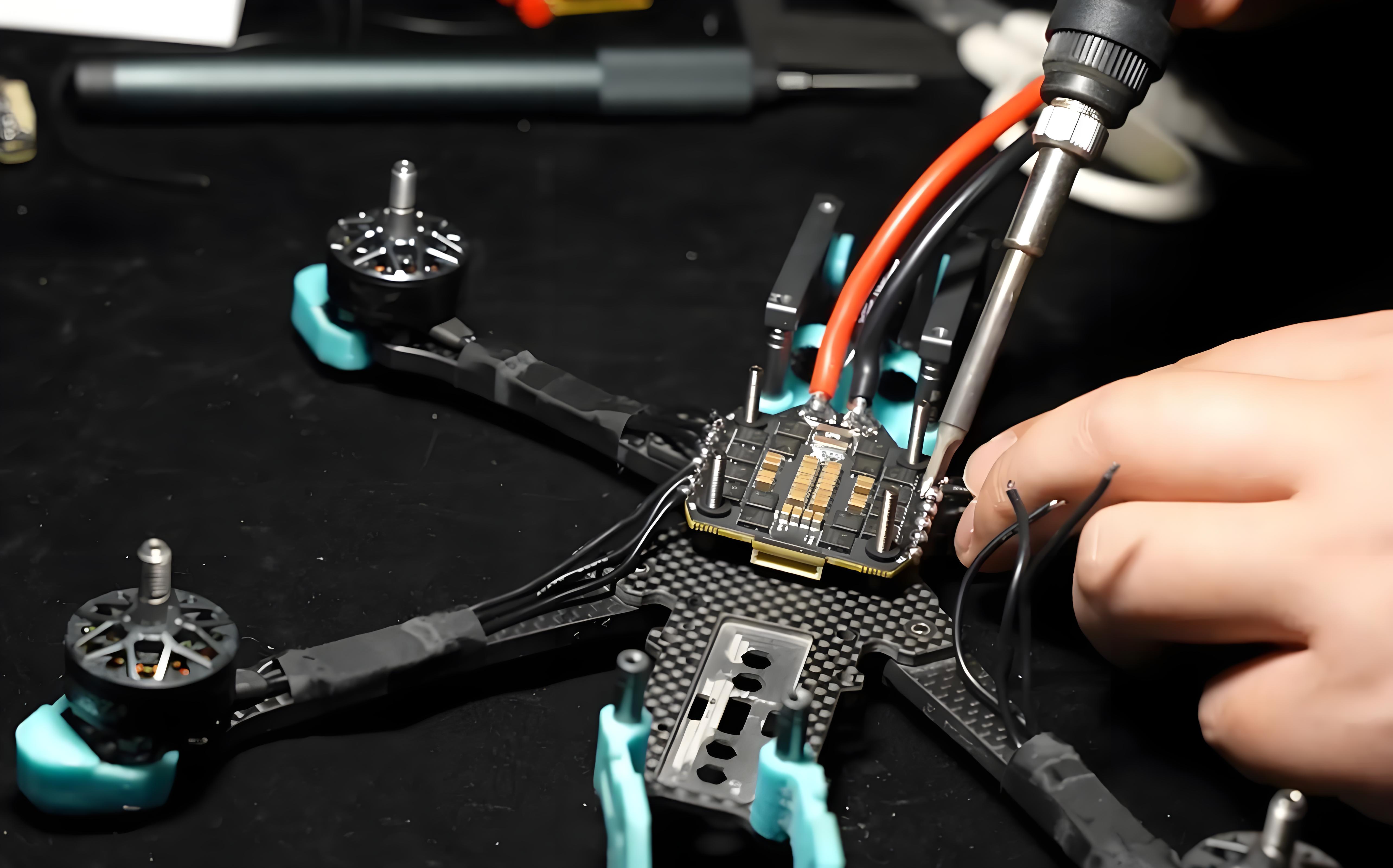
- The frame is the foundation of the FPV drone, and its size determines the selection range of other components. The common frame sizes and suitable parts are as follows:
- 65mm wheelbase: suitable for small, lightweight flight, usually with 31mm paddles, using 1S battery.
- 75mm wheelbase: suitable for medium sized flights, can be paired with 40mm paddles and use 1S or 2S batteries.
- 125mm wheelbase: Suitable for 2.5 inch paddles, using 3S or 4S batteries.
- 150mm wheelbase: Suitable for 3-inch paddles, using 4S or 6S batteries.
- 180mm wheelbase: Suitable for 4-inch paddles, using 4S or 6S batteries.
- 210mm wheelbase: suitable for 5-inch paddles, using 4S or 6S batteries.
- 250mm wheelbase: suitable for 6-inch blade, using 4S or 6S battery.
- 31mm paddle: suitable for small motors with high KV value (18000-25000), such as 0603 or 0802.
- 40mm paddle: suitable for 0802 or 1102 motors with 15000-18000 KV.
- 2 inch paddle: suitable for 6000-11000 KV 1103 or 1105 motors.
- 2.5 inch paddle: suitable for 5000-6000 KV 1104 or 1106 motor.
- 3-inch blade: fits 1407 or 1408 motors from 3500-4500 KV.
- 4-inch blade: fits 1407 or 1507 motors from 3000-4000 KV.
- 5-inch blade: 2207 or 2306 motor for 2300-3000 KV.
- 6-inch paddle: suitable for 2207 or 2407 motors of 2100-2500 KV.
- ESC needs to match the current and voltage of the motor, common ESC choices are as follows:
- Small machine (65mm-75mm): 5A or 10A ESC is available.
- Medium-sized machine (125mm-150mm): 15A or 20A ESC.
- Large machine (180mm-250mm): 25A or 40A ESC.
- Small machine: use 1S or 2S battery, capacity 250-300mAh.
- Medium-sized machine: use 2S or 3S battery, capacity 450-650mAh.
- Large machine: use 3S or 4S battery, capacity 1000-1500mAh.
- Ultra-large aircraft: use 4S or 6S battery, capacity 1300-2500mAh.
Flight controller is the core component of FPV drone, which needs to be compatible with ESC and motor. Common flight controller options are as follows:
- Entry-level: 32-bit, 48k flight controller.
- Advanced player: can choose 96k or 128k flight control.
- Camera: choose a camera with 1.66/1.8 wide angle lens.
- Mapping transmitter: choose the suitable power and frequency band according to the flight distance.
- FPV glasses: choose high-end products such as CADDXFPV Goggles X.
- Remote control: RadioMaster remote control can be chosen.
- Receiver: It needs to be compatible with the remote control and support low latency transmission.
- Paddle choice: small pitch paddle is more suitable for flower flying (Freestyle), large pitch paddle is suitable for racing.
- Battery capacity: 6S 1300mAh battery is a better choice for versatility.


